
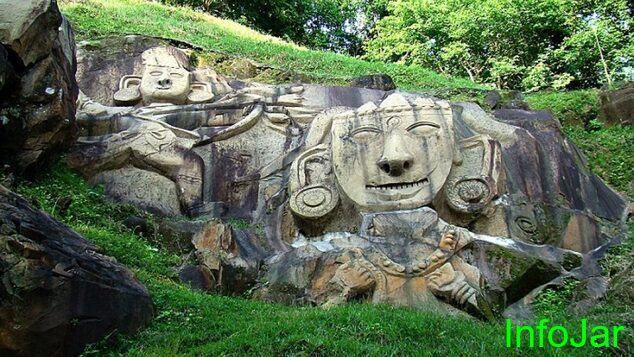
ASI and the government are working together to conserve the collection of Shaivite rocks sculptures in the northern part of the state. Unakoti, the chiselled, “Angkor Wat of the North-East,” has been nominated for UNESCO’s world heritage designation.
Unakoti is the chiselled Angkor Wat of the North-East region. ASI and the government are vying to get a UNESCO world Heritage tag. This tag will allow them both to work together to protect the Shaivite rock sculptures found in the northern parts of the state. Unakoti, located about 180km from here, is home to huge bas-relief statues made of huge hills and dating back to the 8-9th centuries.
The rock-cut sculptures have a huge structure and distinct mongoloid features. They also display the same mystical appeal as the enchanting figures at the Angkor Wat temple in Cambodia. It is also known as the Angkor Wat in North-East,” stated Panna Lal Roy who has been studying these sculptures for many decades.
Unakoti is Bengali for one less than a million (koti in Bengali). It’s a rock-cut art form that has been neglected for centuries. Many of its art facets are now damaged by weather.
The situation was “slightly improved” after the Archaeological Survey of India adopted it as a heritage location. However, a government official stated that there is still much work to do, and that the Centre has approached UNESCO for it to be declared a World Heritage Site.
Official claimed that the Centre had recently given Rs12 crore to the State for the development of the site as a major tourist destination. However, as the ASI prohibits any activity in the core of the archaeological site’s archaeological sites, the official said.
He said that the Tripura government has begun to develop areas around the site in order to encourage tourists to see this treasure of North East. Unakoti has two types of images: rock-carved and stone. The prominent rock-cut carvings include the huge Ganesha figures and the Shiva head central.
Unakotiswara Kal Bhairava is the central Shiva head. It is approximately 30 feet tall, and includes an embroidered headdress that is 10 feet high. Two full-size female figures are found on either side of the head-dress for the central Shiva – Durga on a lion, and another on the opposite side.
Three enormous images of Nandi Bull, a huge bull, are also half-buried under the ground. Unakoti also contains many other rock-cut and stone images. According to Hindu mythology, Lord Shiva spent one night at Unakoti while on his way to Kashi. Unakoti, or less than one-hundred gods and goddesses accompanied him.
Legend has it that Lord Shiva asked his followers to get up early and travel towards Kashi. Lord Shiva was the only one to wake up at dawn, and that included all his
followers. Roy stated that before he left for Kashi alone, he cursed the gods and goddesses sleeping to make them turn into stone, and that is how the site got its name.
Thousands of tourists and locals visit the site every April during Ashokastami Mela. Roy claimed that Unakoti was a popular Hindu Shaivite pilgrimage spot during the reigning of the Pala empire. However, archaeologists have suggested that the site might have also been Buddhist in nature.

I am a WordPress Developer and SEO Executive. I've been writing blogs for the past 1 year, and I love to read books. I'm passionate about helping businesses reach their potential through content writing, SEO techniques and website development.